I Fall into Several Good Books

As I’m writing this 5 days before the election, I am hoping all of you will vote! Here are some books to take you through what will probably be a very long week:

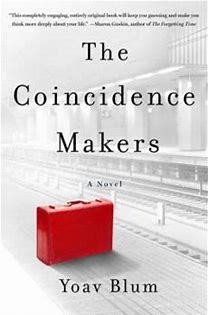
The Coincidence Makers a novel by Yoav Blum—Did you ever wonder why, when you run into an old friend, suddenly a whole new part of your life opens? Was it just a coincidence or was there a secret organization, complete with a bureaucracy and special courses running these “coincidences”. Well, according to Blum’s new novel, there is.

Guy, Eric and Emily are the Coincidence Makers who make it their business for you to miss that bus, drop those papers or hear that song that will change your life. And they do a fine job. But that was not their only job. Guy’s first job was an Imaginary Friend, who stood by a child that needed help and only left when he didn’t need that help. And that is when Guy met Cas, another Imaginary Friend to a little girl. Guy was never supposed to fall in love, but he did.

Here is when the book gets interesting. Not only do we follow those people whose lives are affected by the Coincidence Makers, but the makers themselves. And what happens when they refuse their jobs? An interesting look at the behind the scenes that could affect us and them as well.

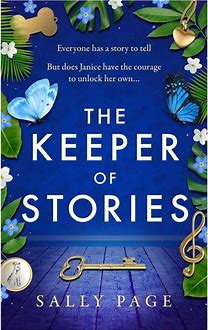
The Keeper of Stories by Sally Page—Janice is a house cleaner, and a very good one, but her real passion is collecting stories. She’s a good listener and learns a lot as a nearly invisible cleaner while her very busy clients talk about their lives. She makes friends with Mrs. B., a 90-year-old with a past and a passion for telling stories, and her new friend Ewan, a bus driver, who has picked up conversations on his bus routes.

But it is Janice’s story that is the most compelling, as the novel takes a dark turn when she talks about her own past. Can she reconcile her past with a possible future? Read on.

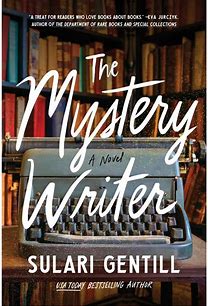
The Mystery Writer by Sulari Gentill—Theodocia Benton arrived in Lawrence Kansas from Australia, giving up law to become a writer. She joined her brother, Gus, and looked forward to her new career, intending to finish her novel. But she had no idea the direction this new path would take. The first person she met was Dan Murdoch, a famous author, with no discernible past, who mentored her and the two developed the beginning of a relationship, that is, until she discovered his dead body, with his new manuscript missing.

Conspiracy theories abound in this page-turner, as more bodies appear. And Theo seems to be at the center of all the murders. With the help of her brother, a brilliant lawyer, and his friend Mac, a detective with a very strange family, the three try to figure out how the murders are connected.

Perhaps the writing wasn’t the best, but all these unanswered questions kept me reading. And Mac’s survivalist family could be a whole book by themselves.

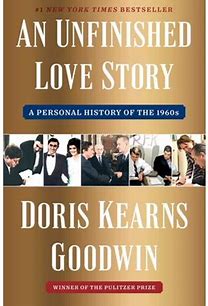
An Unfinished Love Story: A Personal History of the 1960’s by Doris Kearns Goodwin—I am a big DKG fan, from No Ordinary Time: Franklin and Eleanor Roosevelt: The Home Front in World War II, through Wait Til Next Year, A Memoir about baseball, growing up in Brooklyn in the 1950s and the Dodgers. In her books, she somehow makes history, politics and politicians come to life and reading about them feels like reading a novel.

But An Unfinished Love Story is personal. Her husband, Dick Goodwin, was a speech writer, starting out with John Kennedy, and transferring his skill to Lyndon B. Johnson, Bobby Kennedy, Eugene McCarthy, and back again to Bobby. His speeches were iconic, and he saved all the memorabilia about his political life in more than 300 boxes.

After 50 years, Doris and Dick decided to open these boxes, and with that, unpacked all the memories and arguments that came with them. For all the bittersweet memories that Dick had of Lyndon Johnson, Doris had more pleasant ones for she also worked for LBJ. The portrait of LBJ was very intimate and fascinating from both their perspectives.

The best part of the book for me though, was that I remembered it all, after all, I was child/student of the 60s.

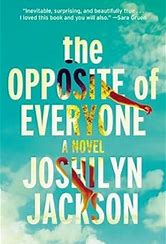
The Opposite of Everyone by Joshilyn Jackson—As in any Joshilyn Jackson novel, you don’t know what you’re getting into (well maybe a little). And “The Opposite of Everyone” is no exception. Paula Vauss is a tough divorce attorney, but she is so much more.

She has a past. Growing up with Kai, her hippy mother who constantly shared tales of Indian mythology, Paula, born Kali Jae, never stayed in one place very long, or kept a name very long or got used to Kai’s boyfriends for very long. After their falling out, except for a check that she sent Kai every month, Paula was on her own. But when the last check was returned, with a short enigmatic note attached, Paula began a quest to find her mother. What she found was much more. Part romance, part suspense, but mostly about family, Jackson has once again written a novel that makes you love this very flawed heroine at its center.

Books I read while I COVIDed

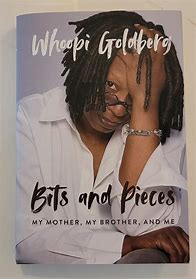
Bits and Pieces: My Mother, My Brother and Me by Whoopi Goldberg—Let me be honest, I am a big fan of Whoopi Goldberg. I enjoy her comedy, and I identify with her politics and her feminism. I admire her acting and I’m an unapologetic viewer of The View (an unscripted women’s talk show featuring Goldberg, as host and five other women discussing the news of the day). But most of all, I respect her honesty. And this book is honest.

Bits and Pieces is not a tell all memoir but a response to her grief following the death of her mother, Emma and five years later, her brother, Clyde. They were all she had when she was growing up in the projects of New York City.

 As a single mother, life was not easy for Emma Johnson, especially with a child like Caryn (Whoopi’s birth name) who wanted to live her own life as she saw it. Suffering from dyslexia, but not knowing what it was, Caryn relied on her mother to guide her through school. Knowing that school couldn’t teach them everything, she used New York as a teaching tool, taking advantage of all that the city had to offer, including museums, classes and the performing arts.

When Caryn was 8 years old, Emma broke down and had to be hospitalized. Caryn and Clyde stayed with their aunt and sometimes with their father. This went on for two years, and when Emma returned from the hospital after having electroshock treatment, she looked the same, but she wasn’t all there. Even though at first, she didn’t even recognize her children, she faked it until little by little she became the woman that she once was. And she was again there for Caryn and Clyde.

She was there when Whoopi decided to quit high school, when Whoopi went into show business, changed her name while offering her suggestions, and when Whoopi became pregnant. She was never not there, no matter how far away they were from each other.

This is not a polished memoir, but it is heartfelt and fascinating. And worth the read.

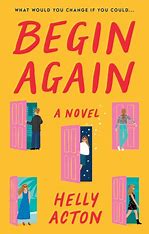
Begin Again by Helly Acton—Frankie was 36 years old, ready to celebrate her birthday, on yet another blind date which she couldn’t finish. Instead, she sneaks out and comforts herself with a kebab. After an unintended fall and an unintended choke, she dies.

But that is just the beginning of the story. She finds herself in an office with some choices to make. Mable (some sort of afterlife counselor) tries to explain to her that she can decide on one of the three paths that she could have taken in her life, return to her old life, or go “straight to her final destination”. And that is the crux of this novel.

At first it reminded me of Bridget Jones from the book, the movie and the diary, but Frankie develops into a 3-dimensional character with a lot of back stories. Begin Again made me think about the choices we’ve all had in our lives and specifically what I would do. It’s a quick read, perfect for the beach and even for your book club…think about that discussion!  

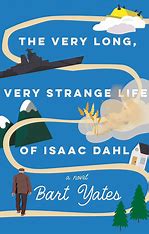
The Very Long Strange Life of Isaac Dahl: a Novel by Bart Yates—96-year-old Isaac Dahl tells us the story of his long life, that of his family and the saga that is the 20th century and into the 21st.  But not every day…only the 12 most important days, most important for him, for his family or for the country. He begins in Bingham Utah when he and his family are struck by an avalanche and 8-year-old Isaac and his twin sister, Agnes are stuck in an upside-down bathtub which ultimately saves them, but not their parents.

We next see them as teenagers living in the Oklahoma Dust Bowl with their uncle and lifelong friend, Bo. Each chapter paints a vivid picture of Isaac and his always combative but loving relationship with Agnes. We skip ahead to 1942 when journalist Isaac serves aboard the USS Huston and faces the horrors of war that never really leave him. We experience the Civil Rights Movement, the AIDS crisis and his growing extended family. We live through their births and deaths and the days that are just plain life. This novel was narrated with humor and affection, one that you can recommend to just about anyone.

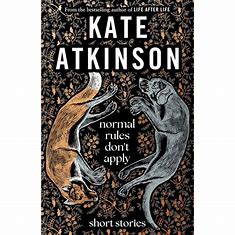
Normal Rules Don’t Apply: Stories by Kate Atkinson—Here is my advice to anyone that reads works by Kate Atkinson: Pay attention! I learned this when I read her first book Behind the Scenes at the Museum, where there are clues everywhere. The same is true for her latest short stories where you soon realize they are interrelated. Part fairytale, part dystopia, all are a wink to the reader.

Franklin, the most repeated character in these stories, tries to write a book on chaos theory, meets a no-nonsense woman named Connie and her very strange family, and listens carefully to a talking horse. We meet a house full of stuffed animals living under the cruel regime of a young child. In “The Void” life comes to a halt for five minutes when anyone caught outside was killed. And it happens again every day, five minutes later. No one understands why. Don’t worry, you’ll meet the void again in other stories.

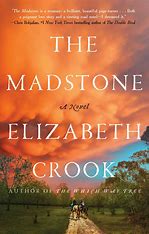
The Madstone by Elizabeth Crook—The year is 1868- and 20-year-old Benjamin, a wood carver is quietly living his life in Comfort, Texas when a harried man, Dickie leaps off a stagecoach to use the double privy in the middle of town. This is the beginning of a life changing event for Benjamin. Because the stagecoach ultimately leaves without Dickie and his very important bag, he strikes a deal with Benjamin to meet the stagecoach at Boerne, a nearby town. Much occurs during this part of the trip…they meet a barefoot man, stripped of his possessions by thieves and pick him up, only to meet the thieves again, and a pregnant woman with her 4-year-old boy, riding in the coach. It is to this 4-year-old “Tot” that the book is written, by Benjamin, years later.

So, it is written in the 2nd person, in old western English, the mostly true story of this tiny group on their way to Galveston. They are assaulted by nature in the form of a hailstorm, by a rabid coyote, by thieves, a curse and worst, by the brothers of Nell’s husband. But they are also helped by Horhay, a Black Seminole, and the madstone that he shares to save Tot’s life.

This is an incredible tale that keeps the pages turning. And if you want more, as I did, after finishing this novel, read the prequel, sequel and possibly “sidequel” The Which Way Tree, also narrated by Benjamin.

I was not familiar with Elizabeth Crook, but I am now. If you are a fan of Paulette Jiles as I am (News of the World) you will certainly enjoy this western odyssey.

Well, this is the end of my summer reading, stay-at-home and wonder if this will ever end (COVID, not the books). Happy to report that I am allowed to go about my business now. My tip to you…get your vaccine and wear a mask in the airport. And tell me about any fabulous books that you’re reading!

Summer in the Burbs are for Reading in the Shade

No Two Persons by Erica Bauermeister—This is, so far, the most creative novel that I’ve read this year. Bauermeister takes us on a journey starting with Alice, a writer who eventually writes a novel, “Theo” loosely based on her family. The following chapters show how her book affects the lives of those exposed to it.

We meet the literary agent, an exhausted new mother who picks out “Theo” from a pile of discarded novels. We meet the artist who uses the book in her found art… And the former actor who rebuilds his life by narrating the audiobook version. We discover a homeless teenager and how “Theo” impacts her life.  And the widower who learns about his wife’s final days through reading “Theo”. And, finally how all these characters come together at the end. Fascinating concept!

My book club is reading this, and we will have a conversation with the author. I can’t wait.

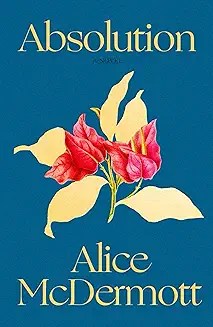
Absolution by Alice McDermott—This is an incredible book that I appreciated on so many levels. Tricia is the young wife of a man involved somehow in the military industrial complex at the onset of the Vietnam War in 1963, when women wore girdles in 100-degree weather. Both she and her husband are stationed in Saigon. She is there as a “helpmeet” for him, but she meets Charlene, a forceful woman who introduces her to her various charities, including dressing Barbies in a Vietnamese costume (ao dai) and selling them to rich Americans.

In many ways Tricia is the naïve opposite twin of Charlene. (Twinning is an important feature in this novel) We know that she is narrating the book to someone while looking back on that era, not only politically but from a feminist perspective and from a Catholic perspective as well. She sees things and learns things in Saigon and eventually becomes a much more mature and well-rounded woman.

But this novel is also about “absolution”. Who should be absolved and who will absolve them? I strongly urge your book club to read this. You will have a fascinating discussion.

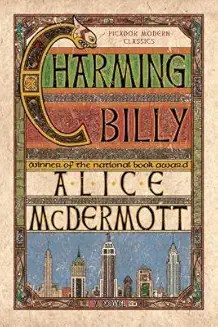
Charming Billy by Alice McDermott—(from my column in the Jan 14, 1999, The Sentinel Newspaper).  The plot is simple. Everyone loved Billy Lynch. But he lived and died a soft-spoken, Keats quoting drunk. We first learn about him as his friends and family gather at a Bronx restaurant after his funeral, much as if we were a fly on the wall and listen to the off-handed comments of the people that loved him. And little by little the plot is woven.

We learn about the Irish girl Eva, the love of his life, and his cousin Dennis who told a lie long ago and probably changed Billy’s life. And Maeve, Billy’s wife, who loved him and took care of him, much as she took care of her own father.

As time flips back and forth, it is easy to lose track of the many characters, but McDermott takes care to write lovingly about all of Billy’s friends, in the guise of Dennis’s daughter. Everyone has a place in this story. Everyone has a story to tell. This is a book worth reading.

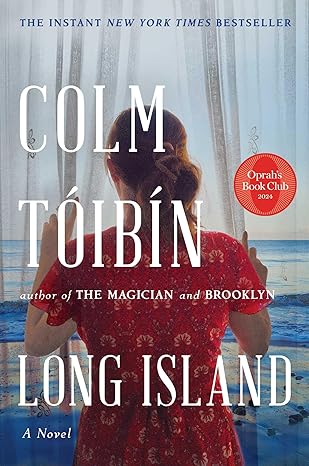
Long Island by Colm Toibin–When last we heard from Eilis in the novel Brooklyn Spring View from my Office – GET LIT WITH LISA, she was in Ireland trying to decide whether she would return to Brooklyn to her new secret husband. Now 20 years later she is back in Enniscorthy visiting her mother on her 80th birthday with her two teenaged children. The question is the same, the man is the same, but the circumstances have changed. Her husband, Tony, has damaged their marriage but Jim Farrell is still looking pretty good.

There are secrets in this town, however. Jim and her best friend Nancy (now a widow) are in a serious relationship but for some reason do not disclose it to anyone, including Eilis…which paves the way for Eilis and Jim, who cannot make up his mind.

And the question again is will she stay or will she go and who may go with her? What happens to Nancy? What about Eilis’ mother and her children? And the answer will remain unanswered until almost the end. Taking place mostly in Ennicorthy, we learn about what has happened there since Eilis last visited and even more about Nancy and her family.

As the reader gets more involved in the drama of their lives, it becomes more difficult to put down this wonderful novel. Toibin has a way of stringing us along. And we are enjoying the ride.

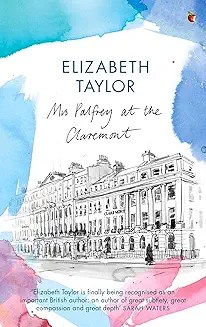
Mrs. Palfrey at the Claremont by Elizabeth Taylor—No not that Elizabeth Taylor, this is a British writer who has written 12 novels. Mrs. Palfrey was her last and it was included in “The 100 Best Novels” in the Guardian.

Laura Palfrey arrives at the Claremont Hotel, outside of London after her husband dies and her daughter moves to Scotland. She considers it a temporary measure and declares to herself that if she does not like it, she can move.

She meets the other residents who are friendly enough but not serious enough for her. When asks if she has any relatives nearby, she mentions her grandson, Desmond. He works at the British Museum, and it seems to be a point in her favor. When he doesn’t come to visit her and she meets Ludo, a nice young poverty-stricken writer, she strikes a deal with him to impersonate her grandson. She will feed him dinner at the Claremont and impress her new companions, which he does.

Their relationship, Ludo’s other relationships and the Claremont residents become the subject of this dark comedy of manners. On the face of it, Mrs Palfrey is about old age, loneliness and death but there are a lot of other ways to read this book. We see how England is changing in the early 1970s, leaving Mrs. Palfrey and friends behind. We see how many characters have twins, especially Ludo and Desmond, and the way old men are becoming more like women and old women are becoming more like men.

Be careful though, as you read this, especially at my age, as you can easily fall into a depression yourself, much like the Claremont ladies. But the writing is clear with humor and pathos as well. And there is a movie with the same title if you don’t want to read the book. Joan Plowright stars.

OK, so there’s not a lot of laughs this month. It’s too hot to laugh, anyway. Stay cool, have a tall glass of something nearby and finish your book…or start one of my suggestions.

Keep the Flame of Reading Alive

Watch John Oliver’s Last Week Tonight about public libraries and what they are facing in this crazy upside-down world.

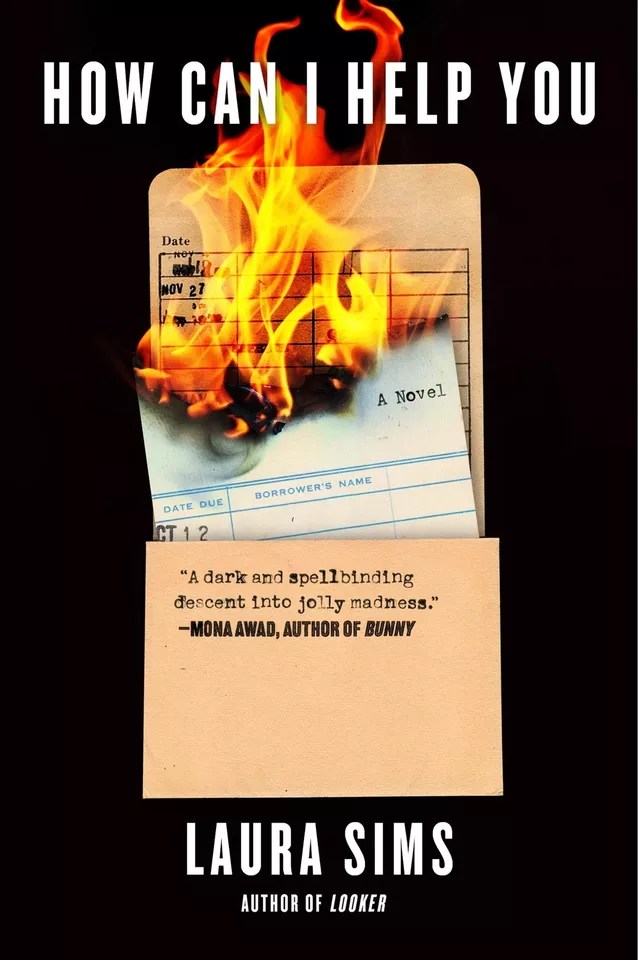
How Can I Help You by Laura Sims—When Margo first walks into a small unassuming public library in the Midwest and takes a job as a Circulation Assistant, she is walking away from her former life as a nurse, a life where she cared about her patients, sometimes a bit too much. They needed her and she needed them to do what was best for them…die. It seems her former life was going to stay in the past until Patricia takes a job as a reference librarian, sitting across from the charismatic Margo. But Patricia, who originally wanted to be a writer, cannot help herself from jotting down notes about her strange coworker. Their strange symbiotic relationship and the book they both were obsessed with (We Have Always Lived in the Castle) is what kept me reading this sometimes too real library page turner.

What could be better than a novel about a serial killer working in a library…in a public library! Sometimes funny, sometimes spine-tinglingly creepy, the patrons alone bring back memories of “life behind the desk”. Somehow Meryl Streep pops up as the perfect Margo.

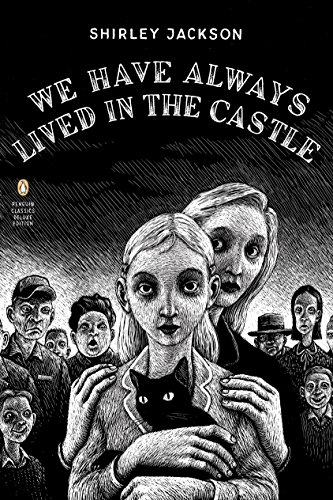
We Have Always Lived in the Castle by Shirley Jackson—Whether or not you realize it you know who Shirley Jackson is. She wrote The Lottery and Haunting of Hill House, two very unsettling novels. As is “The Castle”.

Constance and Merricat live in their family home along with Uncle Julian, a diminished old man forever recounting the deaths of their family. Constance is constantly cooking and cleaning and taking care of Julian and Merricat, her  18-year old sister, (she certainly seems younger) who lives in her own world, burying bits and pieces of her former life and dreaming of flying to the moon.

Six years earlier, the rest of their family were poisoned at the dinner table. Constance was accused but not convicted and has never left the family house since. But the villagers haven’t forgotten and whenever Merricat ventures out, she is taunted by them but dreams of revenge.

When Cousin Charles comes to visit and doesn’t leave, Merricat’s idyllic life is shattered. But Merricat finally inflicts her retribution. Who is the real villain, the people from the village, Cousin Charles or Merricat? Maybe all.

And this is the book that Margo and Patricia were fascinated by in May I Help You.

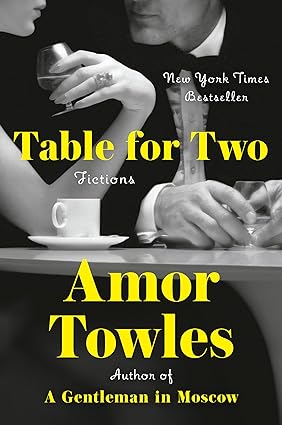
Table for Two: Fictions by Amor Towles—After I finished reading the first short story of this new Towles collection, I knew I had to own this book. Pushkin, a perfectly happy Russian serf, and his wife, get a chance to move to Moscow after the revolution. It takes a while for him to find his way in the new bureaucracy while his wife plunges ahead working for the government. He discovers his place in the many queues in the new revolution, waiting for potatoes, shoes, clothes and food, while making friends and basically networking. And his talent brings him and his wife farther afield. It was a lovely story and there are five more after that, although I wished for more of the innocent, naïve Pushkin.

The other stories take place in New York City, in high class restaurants, in Carnegie Hall, in used bookstores, and in La Guardia Airport. All are, as I have learned to expect from Towles, stories about civility and love and loyalty.

The last part of this delicious book is a novella, taken from the last part of Towles’ Rules of Civility where one of the characters, Eve, boards a train to return to Indiana and at the last minute decides to continue on to Hollywood. The Novella, “Eve in Hollywood” takes off where the novel ends.

Living in the Beverly Hills Hotel, Eve befriends a young Olivia de Havilland, and becomes her protector. When de Havilland is blackmailed with photos that could destroy her reputation and career, Eve, along with a retired police detective and a has-been actor set out to solve the crime in a plot that could rival Dashiell Hammett. “Eve in Hollywood” is a homage to 1930s Hollywood and proves that Towles can write about anything, anywhere in any time period. And that’s why I bought the book.

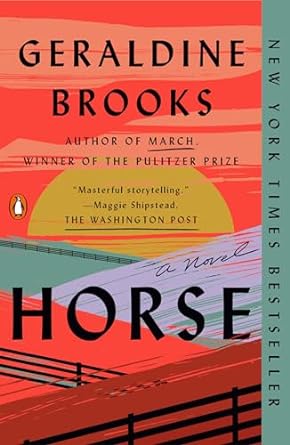
Horse by Geraldine Brooks—Much like walking into the wrong tent at a book festival, Horse led me down a path I didn’t know I wanted to go.

Tracking the life of a famous horse, Lexington, led Brooks down a different path as well. As the reader becomes familiar with his birth and his trainer, Jarrett, we learn about the history of Black groomsmen in pre-Civil War South and the fragility of their lives where a horse, especially a famous one, is more important than theirs. We learn about horse portraiture and the lives of itinerant painters. We learn about Smithsonian scientists in 2019 who research the horse and his bones and what led to his death.  We are reminded that the racism in 2019 is not that much different than 1865. And we also learn that much of what she wrote about and the people in Horse are real. This is a fascinating novel and whether you’re an equestrian or not, makes no difference.

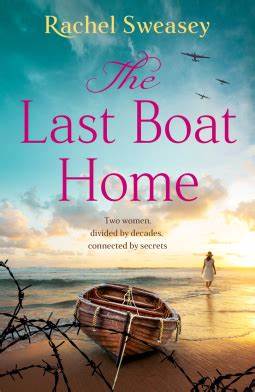
The Last Boat Home by Rachel Sweasey—Daisy meets Alphie on the brink of WWII in the seaside town of Poole, England. They fall in love, get married and settle down to live their happily ever after life when he is called up to serve at Dunkirk. As she is waiting for him to return, she meets Luke, a young Frenchmen who was picked up while literally spending the night in the water, waiting to be rescued. But Alfie wasn’t that lucky. They never recovered his body after his ship was attacked. And she is now, like so many other women, a war widow. But Luke is there for her. And that’s where her second love story begins.

Her granddaughter, Felicity, in 1996, also waits for her husband to return home from his boat but he never does. And after grieving for a year, she finally ventures out with her friends to the French coast and meets a handsome baker who introduces her to much more than bread!  What does her love story have to do with her grandmother’s? Read The Last Boat Home that marries romance, family and the heartbreak of war.


Look What I found, Again, at the Gaithersburg Book Festival

Once again, full disclosure, I have not read the books that the authors discussed, but I’m impressed enough to want to.

Transplant: A Memoir by Bernadine Watson—What I like the most about any book festival is the serendipity of walking into a “tent” and discovering a new writer. Luckily for me I am “directionally challenged” and it happens to me a lot.

Watson, a single black mother in 1984, developed Focal Segmental Glomerulosclerosis (FSGS), a serious kidney disease prevalent in the Black community, in which scar tissue develops on the small parts of the kidney and often leads to kidney failure. Dialysis or a kidney transplant is often the result. (from Mayo Clinic website)

She knew this would change her life. So, this memoir is titularly about her kidney transplant. But it is about much more. She specifically chose the title “Transplant” referring not only to her kidneys but her personal journey from understanding to acceptance of this incurable disease.

She lived on dialysis for five years until she was able to receive a kidney transplant. And there is another regiment to that, both physical, emotional and spiritual. She kept a journal that helped her to remember, and this book was the outcome, which includes her family, with all their problems, and since she remarried, her husband who became deeply involved and wanted to donate one of his kidneys but unfortunately was not a match. But there are other ways to help. And that to me was even more fascinating. He became a member of a group and donated a kidney to someone else, and as a result, someone donated a kidney to Watson. Her husband also spoke at the festival.

As I said before, I haven’t read this book, but it is so intriguing that it is now on my “To Be Read” list.

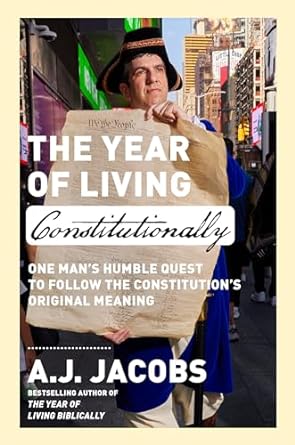
The Year of Living Constitutionally: One Man’s Humble Quest to Follow the Constitution’s Original Meaning by A.J. Jacobs—You may remember his last book, “The Year of Living Biblically” where Jacobs lived, dressed and followed the Bible as literally as possible.  

In this book, which he wrote with a quill, yes really, wore his ubiquitous three-cornered hat, and actually, quartered a soldier in his NYC apartment, he explored the literal meaning of the U.S. Constitution, what it meant when it was written and what it means now.

He talked about how originally the founders did not even want one president. They wanted a committee because they felt that one president could lead to totalitarianism, which may not be a far-off assumption. He talked about how they envisioned a not so powerful Supreme Court and how they viewed the Constitution as a flawed document and expected that there would be amendments periodically. Jacobs feels strongly that it is almost impossible with our widely divided Congress that any amendments could be passed now.

Many of the questions in this talk were about how this affected his family, specifically his wife who had the last say about what he could and couldn’t do. But they all participated in a Revolutionary War reenactment.

If you are worried, as you should be, about where this country is headed, this would be a worthwhile book to peruse. It is light but also will give you some insight into the history of democracy…something we all need right now.

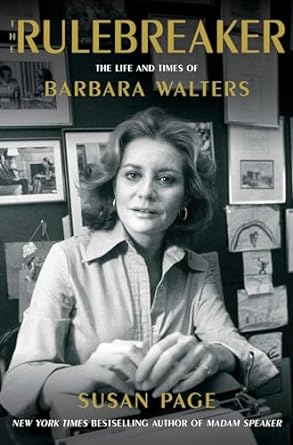
The Rulebreaker: The Life and Times of Barbara Walters by Susan Page—When asked why she writes biographies of women (she also wrote about Nancy Pelosi and Barbara Bush) she answered that women are less likely to have biographies written about them. I can agree with her because as a librarian setting up a book display on women, as I perused the shelves, I thought the same thing.

So, why Barbara Walters…because she never gave up. There are wonderful stories of Walters as she hid in the lady’s room of Camp David to get an interview, and her repeated attempts to secure the interviews of Begin and Sadat. How she survived a hostile workplace environment working with Harry Reasoner as co- anchor for ABC, as well as The Today Show working with Frank McGee.

But there is a private side of Walters that Page reveals: growing up with her father, Lou Walters, the owner of the Latin Quarter, who was either rich or poor depending on his gambling, coping with his suicide attempt and the coverup; her close friendship with the infamous Roy Cohn and how she relied on him for advice and help and stayed loyal to him when everyone else didn’t.  And the love of her life, Edward Brooke, African American senator from Massachusetts who she gave up because she was afraid that it would ruin her career. Each of these could be a book on its own.

And of course, the legacy of Barbara Walters and that iconic portrait of all the women journalists that she had helped along the way.

Whatever you think of Walters, read this book and you will learn more.

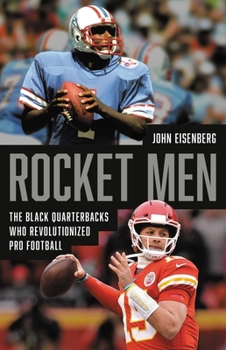
Rocket Men: The Black Quarterbacks Who Revolutionized Pro Football by John Eisenberg—OK this is another example of walking into the wrong tent and being fascinated by a book I might never read. John Eisenberg is a well-known Baltimore Sun sportswriter, having written 11 books about sports from the history of Camden Yards, the founding of the NFL to the story of Native Dancer a famed horse.

But Rocket Men goes beyond football. This is the story of the profoundly talented Black players who were not allowed to become quarterbacks until the 1990s. It is the story of the racism that held them back and how the face of football has changed since then.

His knowledge about the history of all sports, especially football, is amazing to me and Fox 5 sports reporter, Chad Ricardo who interviewed him asked all the right questions and obviously knows his subject, and even the questions from the audience were so informed…this could of course because I knew almost nothing. But I know enough to realize when someone is a talented author. And who to recommend when someone is looking for a good sportswriter.

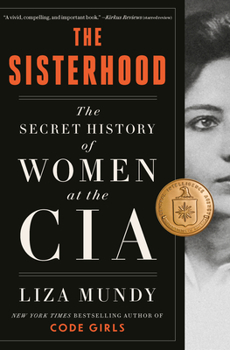
The Sisterhood: The Secret History of the Women at the CIA by Liza Mundy—You may remember The Code Girls about codebreakers during WWII. That was also written by Liza Mundy. This riveting history of the CIA focusing on the women they recruited is not what you see in movies. This is not your Miss Moneypenny, sitting behind the desk and giving 007 his instructions as he kisses her on the forehead. These women who you will not be surprised to know, faced rampant sexism and no matter what their background was, they were sent to the typing pool where their goal was to get out and up. Eloise Page, secretary to Wild Bill Donavon head of the OSS collected information on everyone and by 1947 held the highest-ranking female position in the clandestine operations division.

And even not so far back as the 1990s, women were still relegated to being analysts. And it was there that they watched Osama Ben Laden and the group that he formed: al-Qaeda. They tried to warn the administration that al-Qaeda was a cohesive group, but to no avail. Although they weren’t able to prevent 911, they were able to track bin Laden down.

These were only a few of the women chronicled by Mundy. This is history worth knowing.

Yes, this was a rainy, muddy day at the Festival. If you watched the Preakness, you’ll know what I mean, but it was definitely a day worth spending there. Thanks to the City of Gaithersburg for a “celebration of books, writers and literary excellence”.

Spring View from my Office

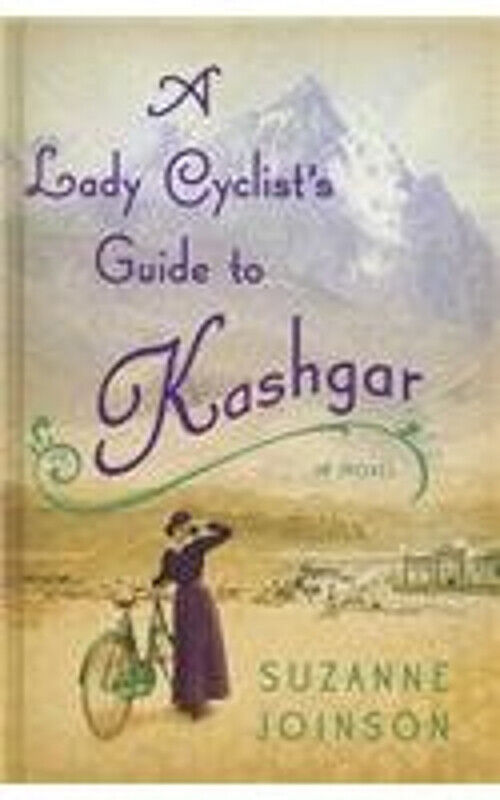
A Lady Cyclist s Guide to Kashgar A Novel by Suzanne Joinson—It is 1923 when Eva and her sister Lizzie, led by a forceful woman named Millicent decide to join a missionary group to Kashgar, a trading center in the western part of China with a mixed population of Muslims, Turks and Chinese. They have no idea what they are getting into. Lizzie is sure that God is guiding them, but Eva is in it to publish a book: A Lady Cyclist’s Guide to Kashgar. Nothing proceeds as planned.

A woman gives birth by the side of the road and although the three women save the baby, the mother perishes during the birth. They are taken under house arrest and will possibly be charged with murder. But meanwhile Eva takes over the care of the baby. And so begins the tale of three Englishwomen who have no clue about Islam, the Middle East, China or the desert.

Eva narrates this tale as she works on her book, while Lizzie and Millicent fail at their aborted attempts to convert anyone.  

Meanwhile every other chapter reverts to present day London where Frieda returns from her own Middle Eastern sojourn to find that she has been left the contents of an apartment from a woman she has never heard of. And an illegal Yemeni artist is camped out by her door. As they sort through the house together, under the watchful eye of a pet owl, the answer finally begins to take shape. Frieda discovers her long lost mother in her very odd commune.

The writing is fluid and the characters, especially Eva and Frieda are carefully drawn. I found the descriptions of the desert population fascinating as well as the English attitude toward them.

Yellow Face by R F Kuang—The premise is simple, but the aftermath becomes far more complicated. Juniper Song Hayward is an aspiring writer and has indeed published a book, but the book doesn’t sell, and she is once again looking for a new idea. Her friend Athena Liu is a dazzling young author whose book was just sold to Netflix…she has made it! The two decide to celebrate with lots of liquor in Athena’s apartment ending with a pancake eating contest. Athena chokes to death and although June tries to save her, Athena dies, leaving behind a manuscript for a book that no one else has seen.

Well, June has some options after reading it (according to me) she could edit the book (it does need a lot of editing) with Athena’s name on it or publish it as her own. Which do you think she chose? “The Last Front” a novel about conscripted Chinese laborers during WWI becomes a great success and somehow June Hayward becomes Juniper Song, giving the illusion that she is Chinese, which she is not, nor does she claim to be.

What she is though, is an antiheroine, a jealous, narcissistic, almost a sociopath who only thinks about the next step in her career. As narrator of this novel, we get full access to her thoughts, and they aren’t pretty.  

Other writers, especially in the Chinese American community, cannot believe that she wrote this book, suspect that it is Athena’s work and go online to declare it. They can never prove it as June is always one step ahead of them. Can she continue to outrun them, or will the “ghost” of Athena drive her off the edge?

R.F Kuang’s provocative take down of cancel culture, online trolls and racism in publishing is a book that once you start, you must finish.  It is very discussable as well.

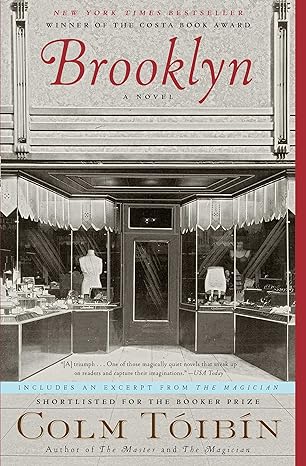
Brooklyn by Colm Toibin—Eilis (pronounced “I lish”) Lacey a young woman from the small town of Enniscorthy, Ireland where prospects seem dim, is talked into going to the USA by her more sophisticated older sister and Father Flood, who is visiting their small town from Brooklyn, NY. Much to her surprise, she’s given the money for the crossing, a place to live and the real possibility of a job. She’s not sure if she really wants to go but everything is in place, and she boards the ship that will (after much seasickness) land her in the United States. Toibin paints a portrait of post-war life in Brooklyn for a young and innocent Irish immigrant.

Is she happy in Brooklyn? That is questionable but when she gets over her deep homesickness and attends a dance at Father Flood’s Parish, she meets Tony and that takes her life into a new realm. She is really introduced to an American way of life now, including a romance for which she may not be ready. When a family crisis forces her to return to Ireland, she must make a choice. And until the very last page, I was not sure what her choice would be. Will she stay or will she go? Read this quiet, coming of age story and you will not be disappointed.

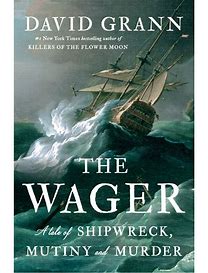
The Wager: A Tale of Shipwreck Mutiny and Murder by David Grann—I am always surprised when I read non-fiction and am not only intrigued but educated. David Grann has written just the right kind of social history, filled with intrigue and the truth behind what really happened to British war ships in the 18th century. Literally, not my cup of tea but I couldn’t put it down.

any1740, a British ship called The Wager set out to find Spanish treasure. By 1742 it is shipwrecked on an island off the coast of Patagonia with 145 men including the much-maligned Captain Cheap. After innumerable problems on the island including near starvation, murder and finally a dispute over the best direction of how to get to civilization which leads to mutiny. John Bulkeley, the ship’s gunner leads most of the men on a smaller boat and Captain Cheap and two other men elect to stay behind. Both sides have an extremely difficult time of it.

That is the very simple plot (of course it’s true though) but the improbable ending keeps the reader gripped in this compelling drama. Grann has done his research, and it shows. He uses the diaries kept by Cheap and Bulkeley, and especially John Byron, 16-year-old midshipman and eventually, grandfather of Lord Byron.

If you enjoy naval history or even you don’t, read The Wager. You won’t be disappointed.

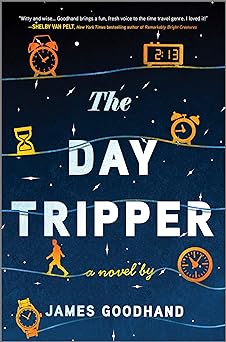
The Day Tripper by James Goodhand—Alex Dean had a very good day with the love of his life, Holly in 1995, looking forward to his certain future at Cambridge, that is until he runs into a childhood friend (well not so much of a friend as a nightmarish memory) is thrown into the Thames and almost drowns. That was his last good day. When he wakes up next, he finds himself in a completely foreign dirty flat remembering little. Apparently, he drank too much the night before, which it seems is a habit. And so it goes. Every day he wakes up in a different year, sometimes in the past and sometimes in the future. He continues to search for Holly and occasionally finds her. But he does find a man that seems to know him and his predicament and gives him some advice: It is the small things in life that can change the big things in life. It takes Alex a long time to come to terms with this, but it is worth waiting for.

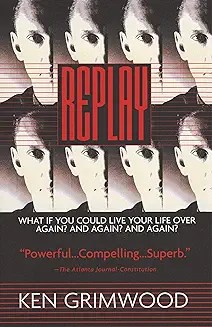
For some reason I enjoy time travel books…not grand time travel but always concerning a shift in the universe impacting one person. Replay by Ken Grimwood is one of the first that I’ve read. He dies at 43 and continues to wake up at 18 knowing everything about his future life. Oh, the possibilities!

Please comment if you like these books or even if you don’t. I’ll be here, waiting. And enjoy Spring.

Take Your Book Outside and Read

Hang the Moon by Jeanette Walls—You may remember Walls from her memoir Glass Castle about growing up in the Appalachians with her off the grid parents. Her father was a bootlegger and that’s where she gets much of her material for her latest novel.

Sallie Kincaid is the daughter of The Duke, a big man in a small town in Virginia. This family saga spans from WWI through Prohibition. Sallie’s mother had died in a violent argument with Duke and he promptly marries Jane and has a son, who is nothing like the firebrand that is Sallie. After an accident with Eddie, Sallie is sent away to stay with her aunt. But when she returns it is to care for her half-brother after the death of Jane. Not even a month goes by, and Duke is married once again. This novel is full of marriages, affairs, secret children that pop up when you least expect them and deaths… lots of deaths.

The legacy of Duke hangs heavy over Sallie as she fights to retain control of Kincaid Holdings. And when yet another family member appears after Duke’s untimely death, Sallie is sent to make sure all Prohibition laws are adhered to. In small-town Virginia that is a tall order.

I will leave the reader to find out how Sallie befriends and protects the bootleggers and leads the law on a merry chase. Feisty, determined to lead her own life, Sallie is an interesting character to follow. Somehow, I can see this as a movie and Barbara Stanwick (that’s how old I am) plays the role of Sallie.

The Librarianist by Patrick DeWitt—Bob Comet, 71 years old and a retired librarian (of course I had to read it) lives alone, has no friends and basically reads. He is not unhappy or lonely. When he meets an obviously lost lady in a pink sweater, he guides her back to the Senior Center where she lives, but often wanders around Portland. When he meets Maria, manager of the center, he decides to volunteer, even against her warnings.  Ah… the reader thinks, he and Maria…but DeWitt’s story goes far afield. Bob is a bland character, but his life has been far from dull. We return to his life as a librarian when he meets both his wife and his best friend. We return farther back to his 12-year-old self when he runs away and spends a week with two strange old actresses in an old hotel. The thing about Bob is that he hardly ever really talks, and we depend on the quirky characters he meets to make the conversation more interesting. And I loved the other characters.

There are many times in the novel that I thought that this is the place where it ends…he dies or he becomes fulfilled and happy…or he finds love…but I was wrong.

His memories of the library though, were true and sometimes very funny. And that is one reason that I would recommend this book.

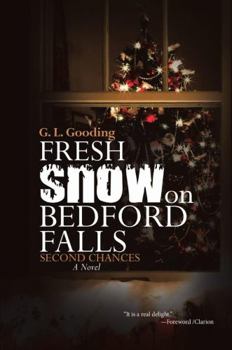
Fresh Snow on Bedford Falls: Second Chances by G.L. Gooding—Well this is a different book…Who hasn’t watched the Christmas classic “It’s a Wonderful Life”? And if you have, who hasn’t wished for a more definitive ending, much like the SNL skit where a group of very upset citizens beat up Mr. Potter. https://youtu.be/vw89o0afb2A

But Gooding takes this in a very different direction. Starting the day after the movie ends, an “investigator” arrives in Bedford Falls to really find out what happened to the missing $8000. And when he finds out, he does a deep dive into Potter’s past to find out what made him the way he is. Most of the novel takes place in London where he meets his future wife, and the reader follows his sad trail to the future.

The writing is not the quality I was searching for, but the story is captivating…and the ending…wait for it!

With My Little Eye by Joshilyn Jackson

What is stalking and what is just extreme curiosity? It certainly depends on the stalkee. In With My Little Eye these are questions worth exploring. Maribel Mills is a semi-well-known actress known for a small part in a series years ago. She does not feel that she warrants a stalker. but somehow, she has one…and he is getting closer, until she literally smells his distinctive odor on her sheets. She then takes her daughter Honor and they move from LA to a place she swore she’d never return…Atlanta where she has a past. 

For a while she thinks she has outrun him. She has a job; she makes a friend and her almost 13 year old autistic daughter seems to have a friend as well. But then the letters start coming again and her ex-boyfriend from LA mysteriously arrives. Oh, by the way, she is also following or is she stalking her ex-husband, while her new friend Cooper seems to be following his ex-girlfriend. 

There are several plots in this fast-paced thriller. Who are the good guys and who is the stalker? There are several choices, and I was wrong about most of them. Joshilyn Jackson continues to provide her readers with wonderful characters, and with especially real problems. I particularly appreciated the depiction of her daughter.

And here’s something again from my Gaithersburg Gazette (RIP) “Check It Out” column from last century (1998) proving I hope that old books and old columns are just as readable.

A Widow for One Year by John Irving—This very literary novel (all four main characters are writers) cover enough issues to keep the reader busy for all 537 pages—the death of children (a staple of Irving’s work) a dysfunctional family obsession with older women and prostitution as well as literary angst.

We follow Ruth Cole as she grows up in the specter of her two dead brothers and missing mother. Like her father, Ruth becomes a writer as is her mother, Marion, and the young man obsessed with Marion. All their writings become part of the novel.

This is a work of incredible emotional force and because of the characters’ strength and believability, it is Irving’s most readable opus to daten(1998 that is.)

New Books for the New Year

The Heaven & Earth Grocery Store by James McBride—McBride is one of my favorite authors and his newest novel is at the top of the list of most popular books of the year, including winning the Kirkus Prize for fiction. The title refers to the grocery store owned by Moshe and Chona, in the mid 1930’s in Pottstown PA. But the store is in Chicken Hill, populated by African Americans and a small collection of Jewish immigrants. Chona runs the store with the help of Addie, and it is Chona who binds her community together.

The Chicken Hill community is populated with the kind of characters that McBride is known for. Each character, no matter how small their role in the book, influences the outcome of this novel.

Dodo is a deaf twelve-year-old black child who lost his hearing at 9 years old, and his mother recently. He goes to live with his aunt Addie and her husband Nate, who works for Moshe in his theatre. When the State comes around to take Dodo to a mental hospital, Addie and Nate decide to hide him with Moshe and Chona. And that’s when the Jewish and Black community unite.

I just listened to McBride speak about this book and he is as mesmerizing in person as he is in print. I have one suggestion for you, when you finish the book, go back and read the first chapter. That will set things in place. I’m looking forward to discussing this with my book club and hope you will as well.

The Ungrateful Refugee: What Immigrants Never Tell You by Dina Nayeri—In September I wrote a review of Daniel Nayeri’s book called Everything Sad is Untrue (A True Story) which is a mixture of truth and fiction about their family’s immigration story aimed at middle schoolers. His sister, Dina also wrote a book. Both penned their books about their refugee experience from Iran to Oklahoma, but Dina’s book was not only from her perspective as a child but what followed her to adulthood.

She also writes about other refugees and their experiences as she travels to places where refugees remain in what seems like an eternal purgatory, waiting at the mercy of immigration officials and lawyers where they are questioned thoroughly but their answers must fit into the correct framework of the country they are trying to enter. Often, these immigrants who come from places like Iran cannot answer in these frameworks. She researched a man who became so frustrated, that he set himself on fire in front of a courthouse in Holland.

Her book is thought provoking, but she does go on (probably too long) as her frustration and anger mounts. Reading both these books and comparing them would make a very interesting book discussion.

Eastbound by Maylis de Kerangal and translated by Jessica Moore—Aliocha is a 20-year-old Russian conscript headed eastbound on the Trans-Siberian railroad with 100 other conscripts. These were the young men who couldn’t find a way out of the Russian army, either by bribery or parental obligations. But Aliocha is neither rich enough nor involved with women enough. He knows he is not a fighter, although he is clever, and so he does what he can to escape.

He meets Helene, a French woman escaping her own past who hides him in her berth. Together, although neither speaks each other’s language, they develop a relationship. And the reader understands each character, how they instinctively approach each other and how they are bound together.

This novella, written in 2012, and translated in 2023, was not about being sent to Ukraine, but reading it, it is a door into the Russian military and what these Russian soldiers may be feeling now. The writing is sparce but beautiful and the characters are fully drawn. This melodic translation fully realizes not only the plot but the relationship and the landscape that speeds by.  A short but mesmerizing novella.

American Mermaid by Julia Langbein—When Penelope, an English teacher, writes a novel about an ecowarrior mermaid, she doesn’t expect it to be a bestseller and when she is approached by Hollywood to make a movie, she is thrilled. But moving to California and fighting to retain the core of the book is much more difficult than actually writing the book herself.

Her attempt to meet and be accepted by film people and book people while attempting to retain the core of the book is the substance of the novel but there is more and that’s what I like most about this story. We get to read excerpts from “American Mermaid” and finally understand the mermaid character, Sylvia, the kindly doctor, and her evil scientist “father”. It is actually more interesting than watching Penny and her tribulations. Lots of plot twists in what turns out to be a beach book, appropriately.

Dad is Fat by Jim Gaffigan—You know him. He’s a standup comedian, and if you’re familiar with his routine, you may find familiar material. But since I’m not, every page is fraught with the crazy and very funny ideas directly from his head. There is no plot but simply essays on being a father of one, then two, until his current five children. His wife is a saint and somehow accomplishes everything including Gaffigan’s career while breastfeeding.

Since my children are long grown, the familiarity of young children comes from my grandchildren, and he is dead on… from stealthily changing diapers in the middle of the night to germ infested daycare. (that’s why we always get sick when we visit) It’s extremely funny and probably a good read while breastfeeding in the middle of the night.

And here’s some homework to do during February. I’m sure you can fill it all in! Until March then.

Serious Holiday Reading

The River We Remember by William Kent Krueger—It is 1958 in the small town of Jewel, Minnesota and everyone has a secret, whether it comes from the war, barely 13 years old, a family secret or a forbidden love. And when Jimmy Quinn, a wealthy landowner and a very unpopular man, is found dead and half eaten in the Alabaster River, everything could be exposed.

Sheriff Brody Dern oversees the investigation, and as much as he doesn’t want it to be, the verdict is murder and Noah Bluestone, a Native American and veteran of World War II who brought a Japanese bride home, is assumed to be the killer. He is arrested but he and his wife refuse to speak at all.

The full story eventually comes out along with the history of the town, the Quinn family, the Native Americans who had lived in the area for so long and all those hidden secrets.

After reading Ordinary Grace and This Tender Land, I wouldn’t say it’s my favorite of his novels, but his writing always brings to mind his love of small-town Minnesota as well as the people in it and they are drawn carefully and lovingly.

Somebody’s Fool (North Bath Trilogy book 3) by Richard Russo—I cannot start this review without revealing that most of Russo’s books are about the real city of Gloversville, NY, as well as other small towns, and that I lived in Gloversville for several years. So, I have a vested interest in this town and in this author. In an interview on NPR Russo explained that he keeps returning to fictional Gloversville because he can’t get it out of his head, just like he can’t get his father out of his head.

The main character in the first two books, Nobody’s Fool and Everybody’s Fool is Sully, based on Russo’s father, an endearing and frustrating man who never kept a job and was estranged from his son for many years. We also meet his equally hard drinking friends. When Peter, his son, a professor, returns to North Bath and slowly gets to know his father, much to his mother’s dismay, Peter becomes part of the fabric of North Bath that could have been as wealthy as nearby Schuyler Springs but never did.

In Somebody’s Fool, Sully has been dead for ten years but somehow is still a part of the story. He had charged Peter with the care of his friends, a downtrodden cast of characters that are working through their problems and are also part of the first two books. Although Peter plans to fix up Sully’s house, sell it and move back to New York City, stuff and people keep getting in his way.
These characters sometimes get confusing, so much so that one of my friends had to make a chart to keep them straight. But each character becomes a friend, and we understand why Peter gets involved with them. And when Thomas, Peter’s estranged son appears on his porch, he sets into motion complex feelings from Peter’s past and various plot twists ensue.

This is a story about healing, as the characters work through their past so they can face their future.  It’s a lovely novel and makes me want to not only reread the first two “Fool” books, but rewatch the movie Nobody’s Fool starring Paul Newman, who for me (and Russo) will always be the face of Sully.

Leftover Woman by Jean Kwok—Chinese born Jasmine escapes to New York from a bad marriage where her husband literally sold her daughter, Fiona, to an American couple. Jasmine is determined to find her, but she must pay back the Chinese mafia who financed her and working at Opium, a Chinese strip club will do it.

Rebecca, Fiona’s adoptive mother, is trying to balance her career with her family and deal with the strange Chinese nanny her husband found.

At first the writing seemed halting and the plot slow, but as the “plot thickened”. I couldn’t wait to find out: will Jasmine find her daughter, will her husband find her, will she finally discover true love with an old friend, will Rebecca at last find balance in her career, and what about that strange nanny?

On a long car trip, I found the answers to all these questions and so will the seven readers waiting to listen to this audible book.

Family Lore by Elizabeth Acevedo—Flor is a woman of many talents, the most important being that she can predict the death of those around her. At 70 she decides to plan a Living Wake…for herself. And the novel revolves around the three days prior. Has she predicted her own death?

Her sisters, though, have talents of their own and we are drawn into all their lives. It is graphic, it is magical, it takes us from the Dominican Republic to New York City, it takes us back in time and flashes forward. Sometimes it is confusing about where and when and even who is speaking but it is always fascinating, and the writing is captivating. I suggest you read it rather than listen to it, as it is easy to get lost…especially when you’re driving on a dark rainy night. This feminist novel is shortlisted for The Center for Fiction 2023 First Novel Prize.
There, There by Tommy Orange— If you are interested in learning about Native Americans living on a reservation in a traditional setting, this is probably not the book for you. Tommy Orange, a debut writer from Oakland, California tells his own story, one of the modern Urban Indian, which is actually not that rare. 70% of Native Americans live in cities. His story is about many characters who are trying to discover their own identity and why Oakland is now a part of it.  

Each character is its own chapter, whether it’s a young man googling traditional dancing, a woman trying to rediscover her family, brothers trying to score it big and a grandmother attempting to keep her grandchildren safe. But they are all headed toward the same destination: the Big Oakland Powwow and that is where they all come together in an ending that nobody expects or wants.

The story is graphic and violent and very sad. The first chapter, an historical essay about the horrific massacres on the Indian community will make the reader think about Thanksgiving in a different way.

It was not an enjoyable read but it certainly will create an interesting discussion, which is why it was chosen for the One Maryland One Book for 2023 by the Maryland Humanities Council, to “bring together diverse people in communities across the state through the shared experience of reading the same book.” I expect that we will have a lively discussion in our book group. The good news is that there are plenty of copies available on and offline.

Thank you all for reading. I hope to hear from you with book suggestions and comments. Have a lovely holiday and a happy new year. Whether you spend it with family or friends please include a good book.

Fall Into a Good Book…yes again!

The Covenant of Water by Abraham Verghase—As promised I finished this grand book and I say grand because it has grand themes: love, loss, family secrets, the forces of nature, of Indian politics and the power of medical science. But it all starts in 1900 in Southwestern India with a 12-year-old girl, Mariamma, on her way to marry a taciturn 43 old widower with a 6-year-old son. It is the last time she will use her name, forever after known as Ammachi (mother) and finally Big Ammachi, a name she is proud to accept. It is through her bravery and her devotion that we get to know her children and grandchildren and it is through her namesake that we discover the family secret.

We are also introduced to Digby Kilgore, a young doctor from Scotland who moves to India. His journey takes him to places he never would have ventured as he meets Rune, a doctor from Sweden who founds St. Bridgets, a leper colony. It is all entwined with the family from Parenbil, and you must read this amazing book to follow the plot twists and fall in love with these amazing characters.

You need to know that Abraham Verghase is first and foremost a physician and so there is a lot of medicine in this book. But there is also his grandmother’s reflections that make up the core of Parenbil.

I not only read it but listened to it as well…made it go faster…and Verghase himself narrated it. Surprisingly, he was very good at different accents, especially Scottish! So, if you have the time, read this sweeping saga. You will not regret it.  

Tom Lake by Ann Patchett—Another novel set in Covid Time, but really only part of the time. Lara, her husband Joe and their three young adult daughters are quarantined on their cherry orchard in Michigan, and to while away the hours as they pick cherries, the girls have coerced their mom into telling them about her days as an actress, especially about her time with Peter Duke. There is a dreamy quality as Lara goes back in time telling her daughters and us about what led to her acting. And why she stopped. She was a young, naïve, actress who had only played one part, Emily, in “Our Town”, the role she apparently was meant to play. It was there she met Duke who captivated her right from the start.

She tells the story as the girls pepper her with questions. They swoon listening to her and probably all fall in love a little with Duke and his brother Sebastian as she recounts the bittersweet tale of those young days when she thought her days were all mapped out for her. And how she ended up on the cherry orchard.

I found Patchett’s use of the plays “Our Town” and “The Cherry Orchard” very intriguing and how she deftly wove them into the story.

I cannot tell you how much I loved this book, and it was possibly because Meryl Streep narrated the audio book. I’ve spoken to many who have read it and although they enjoyed it, they didn’t love it. Somehow, Streep was Lara. I can certainly picture the movie, with of course Streep as the older Lara and even the younger Lara. What a delight.

Hello Beautiful by Ann Napolitano—William grew up lonely and miserable with parents that couldn’t seem to love him after after the death of his 3-year-old sister. His only happiness was basketball and as a tall young man, he finally felt at home and garnered a friendship with his team.

Julia grew up with her 3 sisters in a loving boisterous family, and when William met Julia, he was attracted to her family as much as to her take charge attitude. Julia would take care of him, and she did. Guiding him into an academic career in history where the only subject that truly interested him was the history of basketball. When Julia’s younger sister got pregnant out of wedlock, Julia decided to have a baby to make her mother happy. William tried to warn her that he wasn’t ready. And that’s when his life began to fall apart. Julia didn’t understand, but her sister Sylvie did.  When he left his wife and their baby, Julia never followed…. but Sylvie did. His subsequent suicide attempt led Sylvie to sit by his side for months as he lay in his hospital bed. She never told Julia.

Sylvie and William began to live their new life, while her sisters were realizing their new lives as well, including Julia and her daughter, Alice, who William gave up voluntarily. Julia moved to NY and cut off all ties with the family.

What brings her back is something you’ll have to read yourself. This is a story about the power of a family where there’s either too much love or not enough. The relationship between these sisters is key. Have tissues handy, after all it is an Oprah book.

And here are two articles from my Gaithersburg Gazette (RIP) “Check It Out” column from last century (1992 and 1995):

Patty Jane’s House of Curl by Lorna Landvik—If your taste runs to the great tearjerker movie “Steel Magnolias” then you must read Patty Jane’s House of Curl. Focused on the title character’s beauty parlor, we meet and fall in love with the wisecracking Patty Jane as well as all the women in her family. Not to mention all the men that come in and out of their lives. Their problems include love, alcoholism and death. (the 3 big ones)

Although this is a testament to the strength of women who face constant turmoil, it is far from depressing. The author uses her characters’ humor to balance the darker elements of the story. And if you like her writing, there are many more of her feminist-based Minneapolis novels.

The Queen and I by Sue Townsend—If you thought the English royal family was crazy in real life, here is a novel written in 1992 that takes them one step farther out of reality. Townsend has written a very funny yet cautionary tale about what happens when the People’s Republican Party is elected and the royal family is banished from their various palaces to live in the projects, cut off from their wealth.  Aside from a social worker, there is no one to help them. Every family member must stand on their own merit. What I found most interesting, and maybe not surprising is that the women, and especially the Queen, survive much better than the men. No one is surprised at that. (We’ve all seen “The Crown”)